 RatedDays
The Winter Arc, Done Right: A Realistic Plan and a Tracker That Shows Progress
Every fall, "winter arc" videos take over feeds: 5 a.m. alarms, cold plunges, color-coded rule lists, and the promise that you'll walk into January a different person. The idea underneath is genuinely good. The execution is where most winter arcs fall apart, usually somewhere around week three.
This guide is the version that lasts until December 31: what the winter arc actually is, a plan you can keep up, what to track each day and week, and how to see that it's working.
What is the winter arc?
The winter arc is a self-improvement stretch for the last part of the year, typically October 1 to December 31. Instead of waiting for New Year's resolutions, you start building habits now, so by January they're already part of your routine.
The name comes from storytelling. A "character arc" is the stretch where a character changes. Anime and gaming fans popularized the idea of a training arc, the quiet montage where the hero gets stronger, and the winter arc applies it to the dark, cold months when it's easy to hibernate.
There's no official rulebook. Common winter arc rules people set include:
- A fixed bedtime and wake-up time
- Working out three or more times a week
- Journaling or reflecting every evening
- Reading every day
- Less phone time, or deleting one app
- Cutting back on sugar, alcohol or takeout
- A side project, course or skill with daily practice
Is it too late to start?
No. October 1 is a convention, not a deadline. If you're starting in November or even mid-December, you still get weeks of practice before January, which is the real advantage. Shorten your plan to match the time left, and don't try to "catch up" on missed weeks.
Why most winter arcs fail by week three
The trend's biggest weakness is that it rewards looking intense. A list of twelve strict rules makes a great video and a bad plan. The usual failure points:
- Too many changes at once. Five new habits compete for the same evening hour and the same willpower.
- All-or-nothing rules. "Workout every day" breaks on the first sick day, and one broken rule feels like the whole arc is over.
- No rest built in. Winter already means less daylight, more colds and a packed December.
- Tracking effort but not how life feels. You can tick every box and still feel miserable, and a plan that makes your days worse won't survive the holidays.
A realistic winter arc plan in five steps
1. Pick two or three goals, not ten
Choose one goal each from at most three areas, for example body (move more), mind (read or learn), and life (sleep, money, relationships, home). Write each as an outcome you'd be glad about on December 31: "Run 5K without stopping," "Finish two books," "Be in bed by 11 most nights."
2. Turn each goal into a weekly commitment
Daily rules are brittle. Weekly targets bend without breaking:
- Run 3 times a week (not "run every day")
- Read 20 pages on 5 days a week
- Lights out by 11 on 5 nights a week
3. Set a minimum version for bad days
This is what keeps a winter arc alive. Every habit gets a version so small you can do it sick, tired or traveling: a 10-minute walk instead of a run, 2 pages instead of 20, phone out of the bedroom even if you stay up. The minimum still counts as a check.
4. Schedule rest on purpose
Plan at least one easy day a week, and mark the busy weeks in December now: holidays, travel, end-of-year deadlines. During those weeks, the minimum version is the plan.
5. Decide how you'll track it before you start
Pick your tracker tonight, not next week. The best one is whatever takes under a minute to fill in, every day.
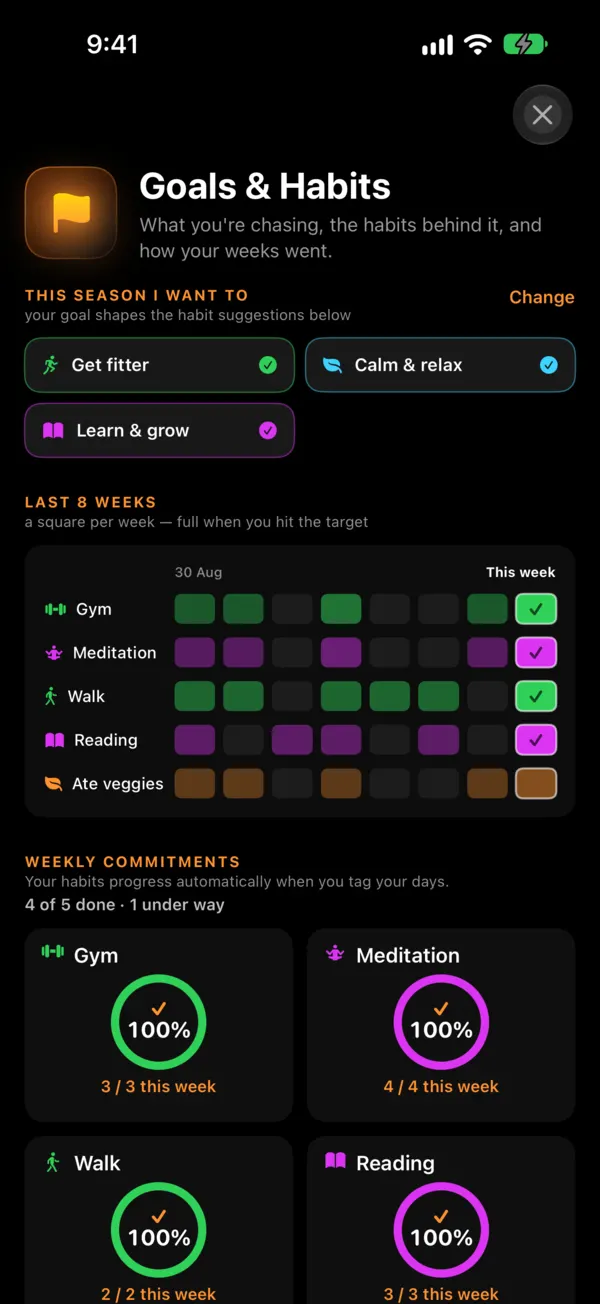
If you want the tracking in one place, Rated Days fits this plan neatly. You rate each day 0 to 10 and add tags like gym, reading or late night. Goals & Habits lets you set goals for the season and weekly habit commitments, then shows how keeping them affects your ratings. On Sundays, the Narrator's Cut sums up your week like a TV narrator recapping last week's episode, which is fitting for an arc.
What to track: daily and weekly
Every day (under a minute)
- A checkbox for each habit, with the minimum version counting.
- One number for the day: 0 to 10. This is the most underrated part of a winter arc tracker. Your checkboxes measure effort; the day rating measures whether your life is actually getting better. If you're unsure how to score honestly, use the calibrated scale in our guide to rating your day out of 10.
- One line of notes: what helped, what got in the way.
- Optional extras if they matter to your goals: hours slept, energy level, steps, money spent.
A sample day:
Nov 12 — 7.1. ✅ Run (3 miles) · ✅ Read (minimum, 2 pages) · ❌ Bed by 11. "Good run in the cold, late night finishing slides."
Every week (about 10 minutes, Sunday)
- Count your checks against each weekly target.
- Look at your day ratings: what was the best day and why? The worst?
- Pick one thing to adjust next week: move a workout earlier, swap a habit, lower a target.
Our list of weekly reflection questions works well as the script for this Sunday check-in.
How to see progress (beyond streaks)
Streaks are motivating until you break one. These show progress more honestly:
- Weekly completion, not daily perfection. Hitting 70–80% of your weekly targets for eight weeks beats a perfect two-week streak followed by quitting.
- Your average day rating by week. If it's flat or rising while your habits stick, the arc is working. If it's falling, something in the plan is costing you more than it gives.
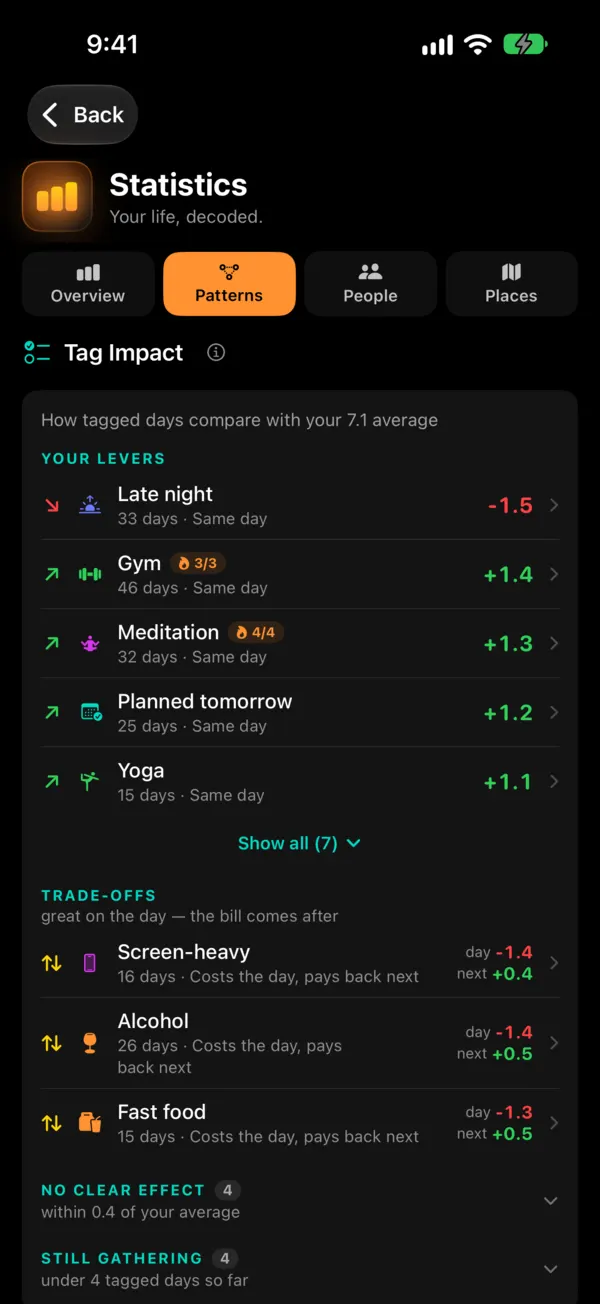
- What lifts your days. After a few weeks, compare days with and without each habit. You may find the early workouts lift your days a lot, while the 5 a.m. alarm drags them down. Keep the first, drop the second.
- A before-and-after snapshot. On day one, write down where you are: your 5K time, books read this year, average bedtime. Compare on December 31.
- The color of your weeks. A grid of days shaded by rating makes a slow improvement visible in a way numbers don't. A year in pixels view of October to December should get gradually warmer if the arc is working.
Avoiding burnout
Winter arcs are meant to build momentum, not to wreck your December. Watch for these signs:
- Your day ratings drop for a week or more while you're "on track."
- You dread habits you used to enjoy.
- You're sleeping less to fit everything in.
- Missing one day makes you want to quit the whole thing.
If you see two or more, cut the plan in half for a week. Keep only the minimum versions. That's not failing the arc; adjusting to reality is the part that actually transfers to January.
Shorter days hit some people harder than others. If your low mood goes beyond winter blues and sticks around, talk to a doctor; tracking is a helpful tool, but it isn't a substitute for professional care. In the US, you can call or text 988 any time.
Winter arc ideas by goal
- Fitness: 3 strength sessions a week; a daily 20-minute walk in daylight; a couch-to-5K plan.
- Sleep: same wake-up time 6 days a week; phone charges outside the bedroom.
- Mind: 20 pages a day; a 5-minute evening reflection; one course module per week.
- Money: a no-spend weekday; track every purchase for the season.
- People: one call or meetup with a friend each week; dinner without screens.
- Home: one drawer, shelf or closet per weekend.
Pick from different areas, keep it to three, and give each a minimum version.
End of the arc: December 31
On the last day, look back at the whole season: your completion rates, your best-rated days, what changed between October and now. Then choose which habits come with you into January. The real win of a winter arc isn't a dramatic transformation; it's starting the new year already in motion, with a clear record of what actually made your days better.
Frequently asked questions
What is the winter arc?
The winter arc is a social media trend where people use the last months of the year, usually October 1 to December 31, to build habits and work toward goals before New Year's. The name borrows from a character arc in a story: a stretch where the main character quietly gets better while everyone else waits for January.
Is it too late to start a winter arc?
No. The October 1 start date is a convention, not a rule. Starting in November or December still gives you weeks of practice before January, which is the whole point. Shorten the plan to fit the time you have and skip any catch-up guilt.
What are the winter arc rules?
There are no official rules. Popular ones include a fixed bedtime and wake time, working out three or more times a week, daily journaling, less social media, reading every day and cutting back on sugar or alcohol. Choose two or three that fit your life rather than copying a full list.
How do I track my winter arc?
Use a simple daily log: a checkbox for each habit, one 0–10 rating for how the day went, and a short note. Review it every Sunday. A paper calendar, spreadsheet or app all work; what matters is that logging takes under a minute so you keep doing it.
How do I avoid burnout during a winter arc?
Start smaller than you think you need to, give every habit a minimum version for bad days, plan rest days on purpose, and let your weekly review adjust the plan. If your day ratings keep falling, the plan is too heavy; scale it back instead of pushing harder.