 RatedDays
What to Write in a Journal When You're Staring at a Blank Page
You bought the notebook. You opened it. And then nothing. Your day felt full of things until you tried to write them down, and now every sentence feels either too boring or too dramatic.
That's normal. The blank page isn't the problem; the lack of structure is. Below are six frameworks you can use tonight, with example entries for each, plus what to write on days when it feels like nothing happened.
First: what a journal is (and isn't) for
A journal isn't an essay, a public post or a memoir draft. Nobody grades it. A useful entry does at least one of these things:
- Records something you'd otherwise forget
- Untangles something that's bothering you
- Notices a pattern in how you live
That's it. If your entry does one of the three, it's a good entry, even if it's four words long and spelled wrong.
6 frameworks for what to write in a journal
1. Happened / Felt / Noticed (the everyday default)
Three lines, every day:
- Happened: one event from today
- Felt: how you felt about it, in plain words
- Noticed: one small detail, thought or lesson
Happened: Presentation at work got moved to Friday. Felt: Relieved, then annoyed at myself for being relieved. I was ready. Noticed: I prepare better when I tell someone the deadline out loud.
This is the one to use if you only learn one. It works on any day, takes three minutes, and covers all three jobs a journal does.
2. The rated day (a number plus one reason)
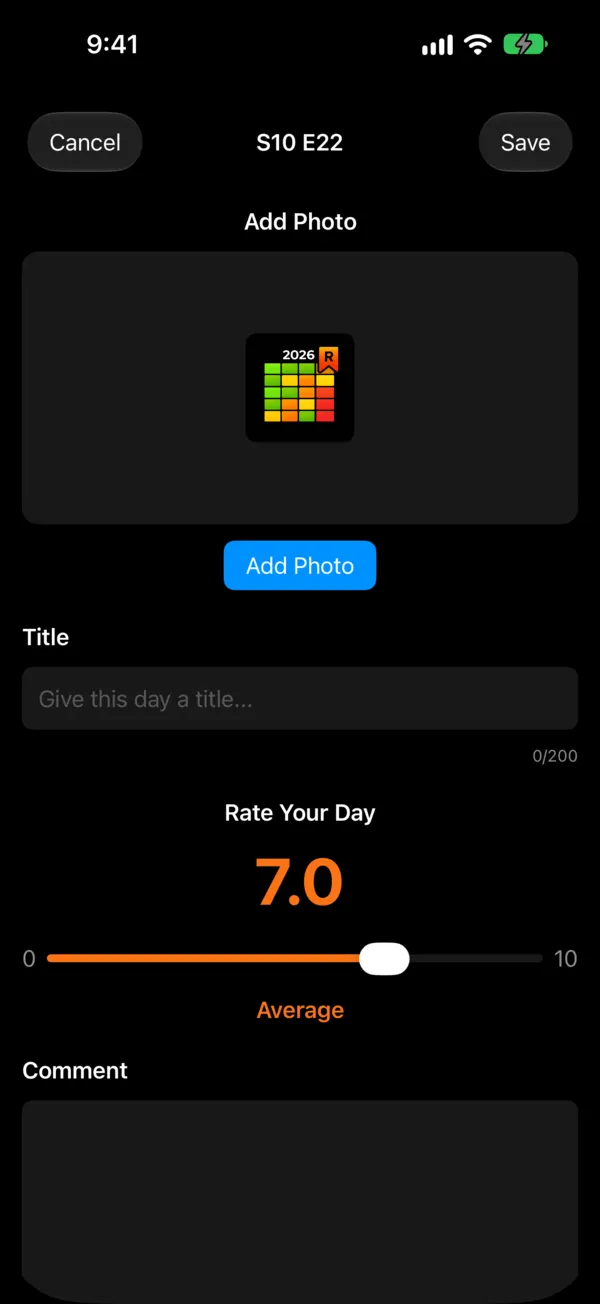
Give the day a score from 0 to 10, then explain the number in a sentence or two.
6.5. Fine work day, but I skipped the gym again and spent the evening scrolling. The half point is the phone call with Ana.
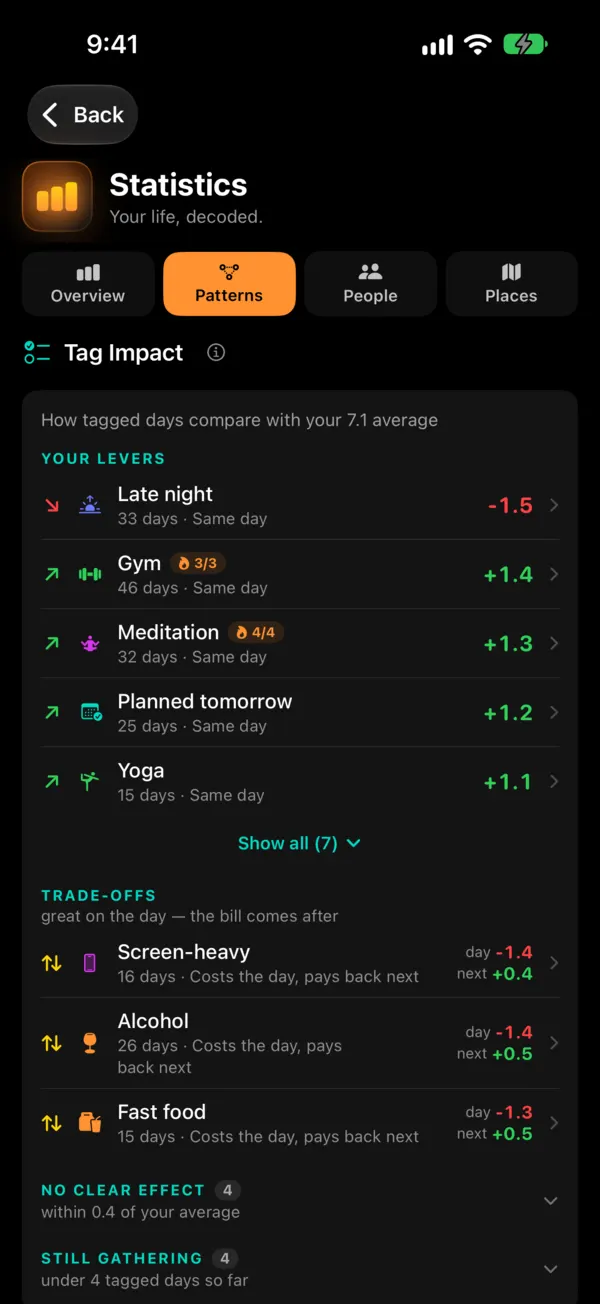
The number does something words don't: after a few weeks, you can compare days. You'll start to notice that your 8s share things (sleep, a walk, seeing certain people) and so do your 4s. See how to track your mood if you want to go further with this.
3. The brain dump
Set a timer for five minutes and write everything in your head, without stopping or editing. To-dos, worries, half-thoughts, song lyrics. When you run out, write "I don't know what to write" until something comes.
Need to call the landlord about the heating. Why did I say that thing to Sam. Dentist next week? Want to cook something real this weekend. Tired. Kind of excited about the trip, actually...
Brain dumps are best on busy, anxious days. You're not aiming for insight; you're getting it out of your head so it stops looping.
4. The unsent letter
Write directly to someone: a friend, an ex, your boss, your younger self, your body. You won't send it. That's the point.
Dear Dad, I wanted to tell you about the promotion and I kept stopping myself because I knew you'd ask about the salary first...
This works when you're stuck on a person or a conversation. Writing to someone often gets you closer to what you really feel than writing about them.
5. The one question
Pick a single question and answer it every night. Same question, for weeks.
- What was the best ten minutes of today?
- What surprised me today?
- What would I do differently?
Answering the same question daily is surprisingly powerful: you get a record you can compare, and you stop wasting energy deciding what to write. When it gets stale, pick a new one from our list of 100 daily journal prompts.
6. The one line
Write exactly one sentence about the day. The most specific thing that happened.
Fixed the bike chain myself with a YouTube video and greasy hands; felt unreasonably proud.
It looks too small to count. It isn't: a year of single lines is a vivid record you can reread in one sitting. If this sounds like you, read our guide to the one line a day journal.
Frameworks 2 and 6 are what Rated Days is built around: you rate each day from 0 to 10, give it an episode title (a one-liner with personality), and add a note if you want. Tags, people and places are optional, but they're what lets the app show you later what lifts or drags your days.
What to write on boring days
Most people quit journaling on the quiet days, not the hard ones. "Nothing happened" feels like nothing to write. But boring days are worth recording: they're your baseline, and they're the ones memory erases first. Here's what to write when the day was just... a day.
- The inventory. What you ate, what you watched, who you texted, where you went. Two minutes, no reflection needed.
- The sensory snapshot. One sight, one sound, one smell from today. "Rain on the skylight. Burnt toast. The neighbor's piano scales again."
- The body check. How did you sleep? Where are you tense? Did you move today?
- The "why not higher?" question. Rate the day, then ask what kept it from being one point better. Boring days often have a quiet answer: "I didn't go outside once."
- The tomorrow line. One thing you want tomorrow to have that today didn't.
- The small win. Laundry done. Replied to the email. Drank water. Write it down; it counts.
A boring-day entry might be just this:
5. Worked from home, rain all day, leftovers twice. Didn't talk to anyone except the delivery guy. Tomorrow: go outside before noon.
That's a perfectly good entry. Read 30 of them in a row and you'll learn more about what your life needs than from any single deep one.
What to write on hard days
On hard days, don't force a lesson. Write the facts first, then the feeling, then one thing you need.
My manager criticized the report in front of everyone. I felt humiliated and then angry. I need to not reply to the email tonight.
Writing about difficult experiences can help people process them; psychologist James Pennebaker's expressive-writing research is the best-known work on this (Harvard Health summary). Still, journaling isn't a substitute for professional help. If you're struggling, talk to a doctor or someone you trust, or call or text 988 in the US.
What not to worry about
- Length. Three sentences counts. Half a page counts. Nobody's measuring.
- Grammar and handwriting. Fragments are fine. Crossed-out words are fine.
- Being interesting. You're the only reader. "Had soup" is a valid entry.
- Missing days. Don't backfill a week from memory. Write today and move on.
- Doing it "right." If an entry records, untangles or notices something, it worked.
Make it a habit (the part that actually matters)
What you write matters less than whether you keep writing. A few things that help:
- Same time, same trigger. After dinner, before bed, on the bus. Tie it to something you already do.
- Shrink the minimum. Decide that one line or one number is enough on bad nights. You'll often write more anyway.
- Use a reminder. A phone alarm, or an app with a daily reminder. Rated Days has one, plus home screen widgets for rating the day without opening the app.
- Look back weekly. Spend five minutes on Sunday rereading the week. That's when patterns show up.
You don't need a better notebook or a perfect method. Pick one framework from this page, use it for two weeks, and see what your days tell you.
Frequently asked questions
What should I write in my journal every day?
Use the same small structure each day so you never start from zero: what happened, how you felt, and one thing you noticed or learned. Add a 0–10 rating for the day if you want to see patterns later. On days with more to say, keep going; on quiet days, three lines is enough.
How long should a journal entry be?
As long as it takes to say the true thing, and no longer than you'll keep doing. For most people that's three sentences to half a page, or two to ten minutes. Short daily entries are more useful than long entries you write once a month.
What do I write when nothing happened today?
Write about the small stuff: what you ate, what you watched, the weather, one conversation, how your body felt. Or rate the day and explain the number. Boring days are worth recording because they're your baseline, and they're the days your memory forgets first.
Should I journal on paper or on my phone?
Whichever you'll actually open. Paper is slower and feels more private and deliberate. A phone is always with you, can remind you, and makes entries searchable. Many people write longer thoughts on paper and use an app for a quick daily rating and note.